Brian’s Story

After his shock MND diagnosis, Brian didn’t know what to expect from a hospice. What he found was warmth, understanding and a community providing support and genuine connection.

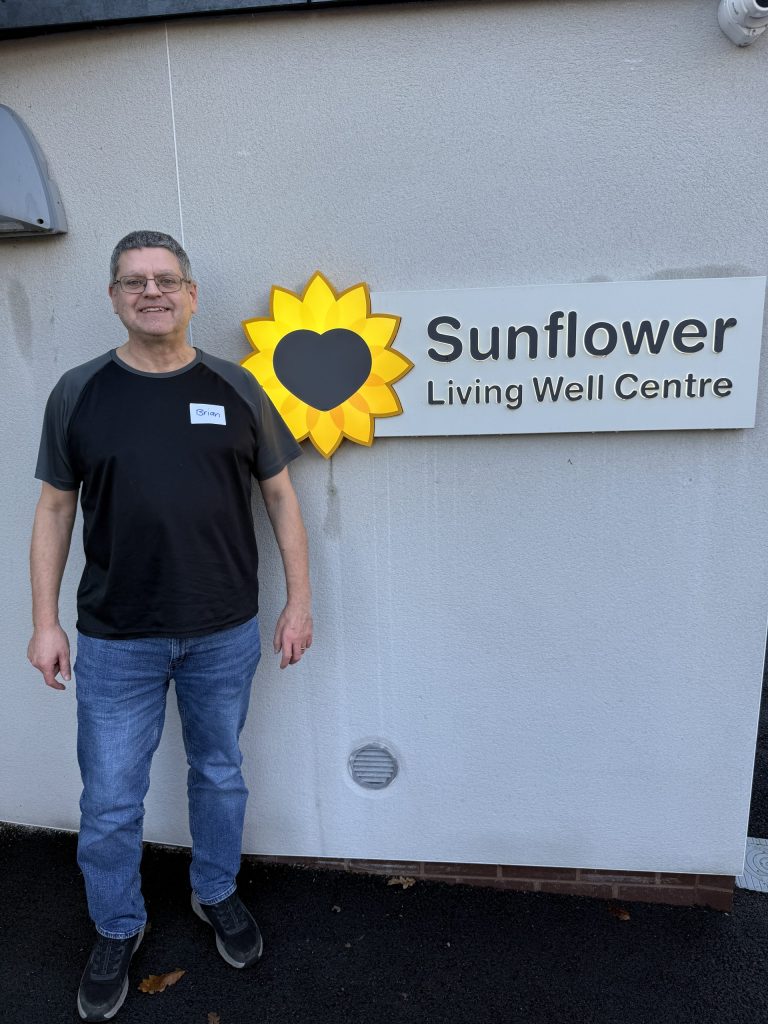
Photo of a man in a black t-shirt and jeans stood outside the Hospice's Sunflower Living Well Centre next o its illuminated sign.

Receiving a Diagnosis

“The first time I heard about the MND sessions at the Hospice, I had only just been diagnosed in the April. Elsa mentioned it to the Slimming World group and someone who already came to the MND sessions said to her, “You should try and come to the Hospice.” When you’ve only just been diagnosed, you’re in total shock. You go from being fit and healthy to your life changing overnight.

Two weeks after my diagnosis, we knew it was the next session at the Hospice. We got in touch with Alice, who filled in the necessary forms, even before Salford Royal sent information. So two weeks after diagnosis, we came in for the first session, which was so helpful.”

Discovering the Hospice

“We’ve been coming since April and haven’t missed a session – that’s how good they are. It’s something we look forward to every month. Like most people, I didn’t know anything about the Hospice other than the Christmas Tree Collection. We’d supported it for donkey’s years but had no involvement with the Hospice itself. We had this idea it might be sad or daunting.

The reality is completely different. It’s uplifting, light and airy. These MND wellbeing days are happy and caring, and from that very first session, we felt so much love and support.”

Connection and Understanding

“Coming here means meeting people with the same condition. You go from being given a life‑limiting illness and not knowing anyone else like that, to suddenly being able to talk to others going through the same thing. We have a laugh – it’s not all serious – and the positivity is a key thing.

There’s no problem talking about symptoms and comparing notes, because MND is different for everyone. Sharing experiences helps.”

Support for Carers and Families

“It’s not just about the people with MND – it’s also about the carers. Elsa hasn’t missed a session. In the afternoons, the carers go to a separate room for their own discussions and support. Being around someone with MND all the time is intense, so it gives them a chance to meet others, share experiences and ask questions.

There are volunteers and Hospice staff in the sessions, and Alice runs them brilliantly. I have nothing but great things to say about her.”

Photo of Brian sat in the Sunflower Centre chatting to a member of staff in blue uniform.
“I have no fear of the place. I want to finish my days here.”
Brian
Photo of Brian sat in the Sunflower Centre stroking therapy dog Lily.

A Warm, Welcoming Environment

“When you first come, you don’t know anyone. But that quickly changes. I’ve got friends here now. You won’t be left on your own – someone will always talk to you. There’s always tea, coffee, biscuits and lunch, giving you the chance to chat and network.

We also all wear name badges. With fatigue and memory symptoms, seeing names is really helpful. After diagnosis you meet so many people, so this small thing makes a big difference.

We sit in one big circle which feels inclusive. Nobody is left on the edges. We introduce ourselves at the start, which breaks the ice and helps new people. When someone new comes, I try to make them feel at ease, because I know how beneficial it is to keep coming.”

Learning Together

“Each month begins with introductions and a cup of tea or coffee. Then we have a structured session with valuable information. When you’re diagnosed with MND, you don’t know what questions to ask and searching online can be overwhelming, especially with fatigue.

Face‑to‑face sessions make everything easier. They’re interactive and informal, with plenty of time for questions. People share their own experiences, spreading knowledge.”

One session changed everything.

“A talk about Lasting Power of Attorney made a huge difference to us. We had never done anything like that, but the speaker explained it clearly. We followed up, and now we have everything in place. Without the session, we would have been trying to work it out alone at home.”

Photo of Brian and another patient sat in the Sunflower Centre smiling at the camera
“Don’t see hospices as scary places… come over the threshold.”
Brian

Changing Perceptions of Hospice Care

“Coming here every month has shown me what a lovely, supportive environment it is. I’ve already said – and it’s now on my notes – that I’m happy to finish my days here at the Hospice. With MND, everyone dies in the end, and I want to be here, because I have no fear of the place.

People assume a hospice is about death and dying, but it’s not like that. I would say to anyone: “Come and have a visit.” You’ll be pleasantly surprised.”

Ongoing Support Beyond MND Days

“I also come for the Fatigue, Anxiety and Breathlessness group, counselling and Art Therapy, which has a big impact on my mental well-being. Complementary therapies are available too. I’ve had hand massages during the MND sessions which have been really beneficial as my hands are seizing up.”

A Final Word

“The people who work and volunteer here are brilliant – welcoming, caring and supportive. Take that step, come over the threshold, and you will see just how amazing it is.”

Christmas Tree Collection

Register your Christmas tree for collection by January 6th & we’ll collect it on the 10th or 11th.

Book now, donate & give the gift of care this Christmas.

No tree? You can still support the collection by making a donation.